100-04 Ruídos e vibrações (NVH)
Texto completo da seção, página por página. Toque no título para ver a página com a imagem.
- Índice da seção p. 89
- Ruído, vibração e aspereza (NVH) p. 90–91
- Chassi 2 p. 92
Página 89 · Índice da seção
Contents
https://ranger.mbrace.com.br/oficina/89 · imagem: https://ranger.mbrace.com.br/img/oficina/89.webp
Noise, Vibration and Harshness
100-04-1
100-04-1
.
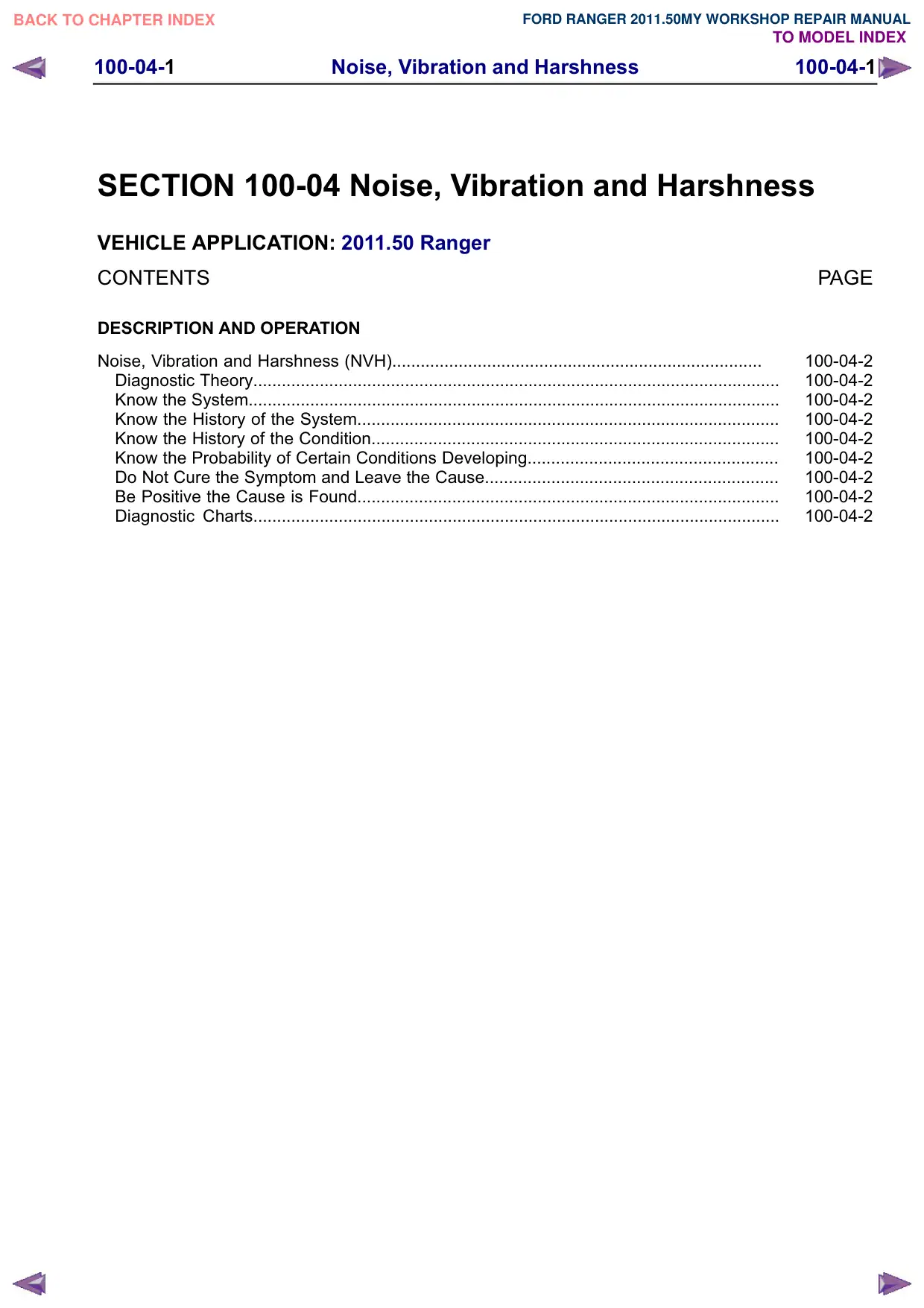
SECTION 100-04 Noise, Vibration and Harshness
VEHICLE APPLICATION: 2011.50 Ranger
CONTENTS
DESCRIPTION AND OPERATION
Noise, Vibration and Harshness (NVH)..............................................................................
Diagnostic Theory...............................................................................................................
Know the System................................................................................................................
Know the History of the System.........................................................................................
Know the History of the Condition......................................................................................
Know the Probability of Certain Conditions Developing.....................................................
Do Not Cure the Symptom and Leave the Cause..............................................................
Be Positive the Cause is Found.........................................................................................
Diagnostic Charts...............................................................................................................
PAGE
100-04-2
100-04-2
100-04-2
100-04-2
100-04-2
100-04-2
100-04-2
100-04-2
100-04-2
Página 90 · Ruído, vibração e aspereza (NVH)
Noise, Vibration and Harshness (NVH)
https://ranger.mbrace.com.br/oficina/90 · imagem: https://ranger.mbrace.com.br/img/oficina/90.webp
Noise, Vibration and Harshness
100-04-2
100-04-2
DESCRIPTION AND OPERATION
Noise, Vibration and Harshness (NVH)
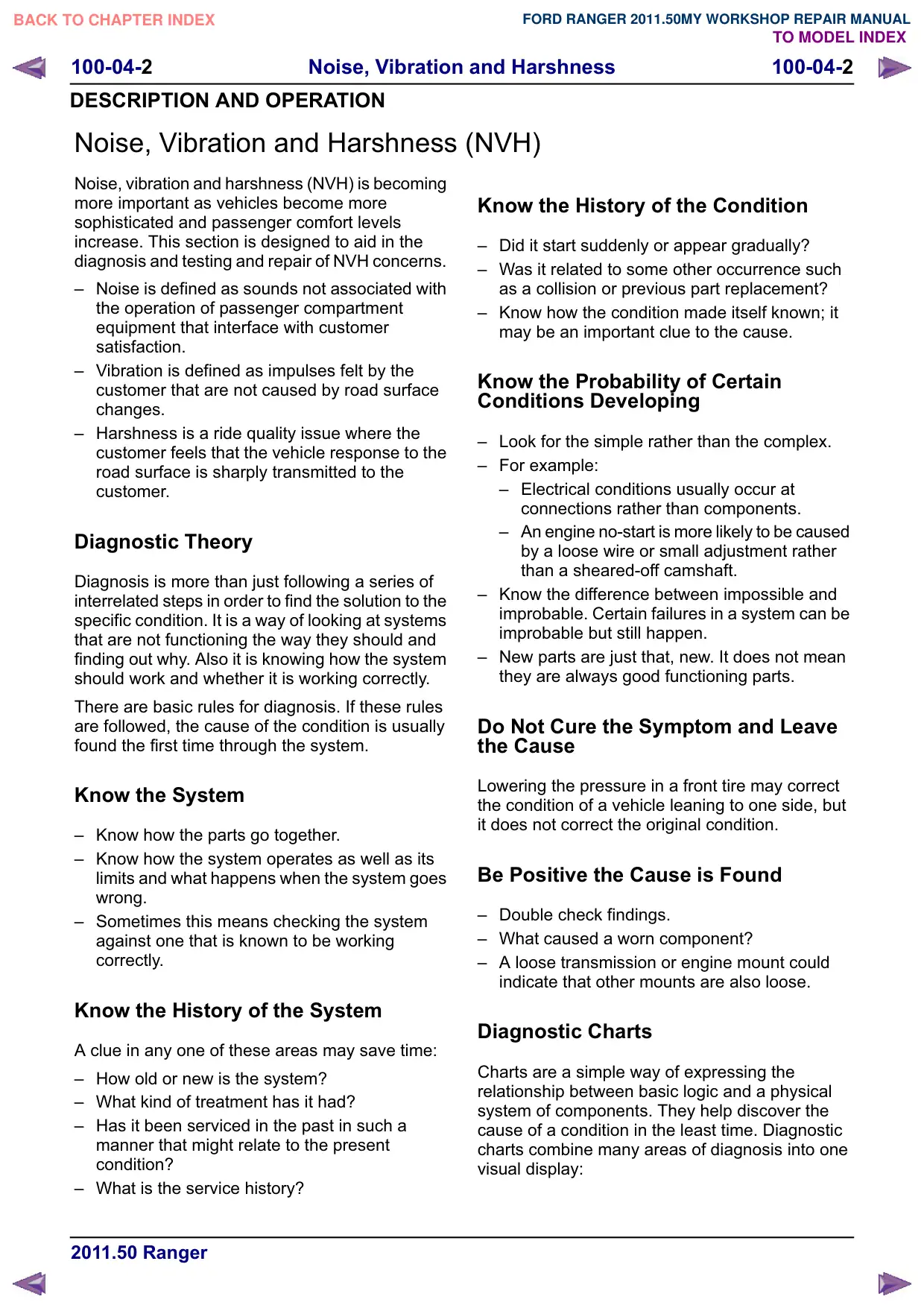
Noise, vibration and harshness (NVH) is becoming
more important as vehicles become more
sophisticated and passenger comfort levels
increase. This section is designed to aid in the
diagnosis and testing and repair of NVH concerns.
œ Noise is defined as sounds not associated with
the operation of passenger compartment
equipment that interface with customer
satisfaction.
œ Vibration is defined as impulses felt by the
customer that are not caused by road surface
changes.
œ Harshness is a ride quality issue where the
customer feels that the vehicle response to the
road surface is sharply transmitted to the
customer.
Diagnostic Theory
Diagnosis is more than just following a series of
interrelated steps in order to find the solution to the
specific condition. It is a way of looking at systems
that are not functioning the way they should and
finding out why. Also it is knowing how the system
should work and whether it is working correctly.
There are basic rules for diagnosis. If these rules
are followed, the cause of the condition is usually
found the first time through the system.
Know the System
œ Know how the parts go together.
œ Know how the system operates as well as its
limits and what happens when the system goes
wrong.
œ Sometimes this means checking the system
against one that is known to be working
correctly.
Know the History of the System
A clue in any one of these areas may save time:
œ How old or new is the system?
œ What kind of treatment has it had?
œ Has it been serviced in the past in such a
manner that might relate to the present
condition?
œ What is the service history?
Know the History of the Condition
œ Did it start suddenly or appear gradually?
œ Was it related to some other occurrence such
as a collision or previous part replacement?
œ Know how the condition made itself known; it
may be an important clue to the cause.
Know the Probability of Certain
Conditions Developing
œ Look for the simple rather than the complex.
œ For example:
œ Electrical conditions usually occur at
connections rather than components.
œ An engine no-start is more likely to be caused
by a loose wire or small adjustment rather
than a sheared-off camshaft.
œ Know the difference between impossible and
improbable. Certain failures in a system can be
improbable but still happen.
œ New parts are just that, new. It does not mean
they are always good functioning parts.
Do Not Cure the Symptom and Leave
the Cause
Lowering the pressure in a front tire may correct
the condition of a vehicle leaning to one side, but
it does not correct the original condition.
Be Positive the Cause is Found
œ Double check findings.
œ What caused a worn component?
œ A loose transmission or engine mount could
indicate that other mounts are also loose.
Diagnostic Charts
Charts are a simple way of expressing the
relationship between basic logic and a physical
system of components. They help discover the
cause of a condition in the least time. Diagnostic
charts combine many areas of diagnosis into one
visual display:
Página 91 · Ruído, vibração e aspereza (NVH)
Noise, Vibration and Harshness (NVH)
https://ranger.mbrace.com.br/oficina/91 · imagem: https://ranger.mbrace.com.br/img/oficina/91.webp
Noise, Vibration and Harshness
100-04-3
100-04-3
DESCRIPTION AND OPERATION
œ Probability of certain things occurring in a
system.
œ Speed of checking certain components or
functions before others.
œ Simplicity of performing certain tests before
others.
œ Elimination of checking huge portions of a
system by performing simple tests.
œ Certainty of narrowing down the search to a
small portion before performing in-depth testing.
The fastest way to find a condition is to work with
the tools that are available. This means working
with proven diagnostic charts and the correct
special equipment for the system.
Página 92 · Chassi 2
Chassis 2
https://ranger.mbrace.com.br/oficina/92 · imagem: https://ranger.mbrace.com.br/img/oficina/92.webp
SECTION TITLE
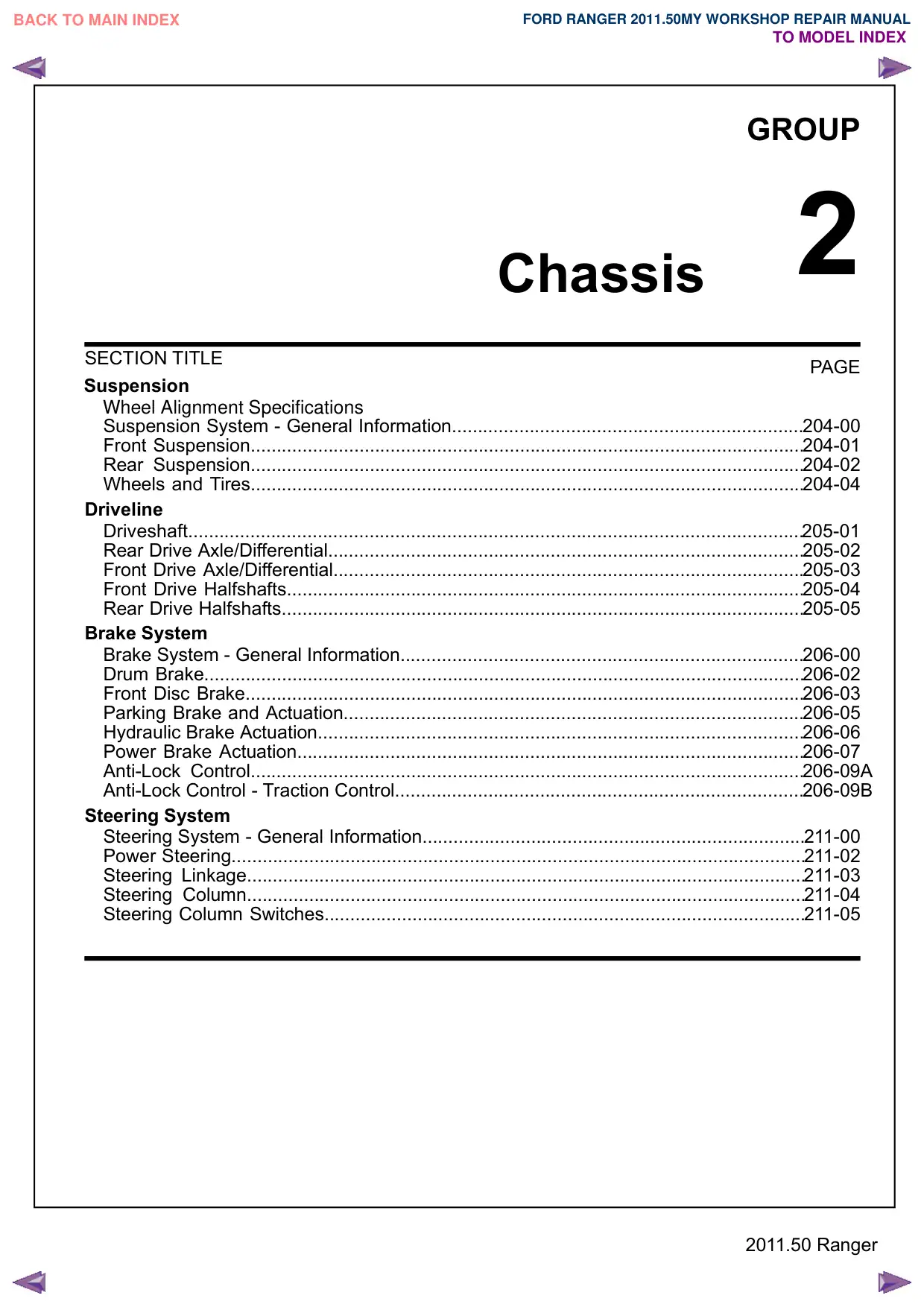
Suspension
Wheel Alignment Specifications
Suspension System - General Information....................................................................204-00
Front Suspension...........................................................................................................204-01
Rear Suspension...........................................................................................................204-02
Wheels and Tires...........................................................................................................204-04
Driveline
Driveshaft.......................................................................................................................205-01
Rear Drive Axle/Differential............................................................................................205-02
Front Drive Axle/Differential...........................................................................................205-03
Front Drive Halfshafts....................................................................................................205-04
Rear Drive Halfshafts.....................................................................................................205-05
Brake System
Brake System - General Information..............................................................................206-00
Drum Brake....................................................................................................................206-02
Front Disc Brake............................................................................................................206-03
Parking Brake and Actuation.........................................................................................206-05
Hydraulic Brake Actuation..............................................................................................206-06
Power Brake Actuation..................................................................................................206-07
Anti-Lock Control...........................................................................................................206-09A
Anti-Lock Control - Traction Control...............................................................................206-09B
Steering System
Steering System - General Information..........................................................................211-00
Power Steering...............................................................................................................211-02
Steering Linkage............................................................................................................211-03
Steering Column............................................................................................................211-04
Steering Column Switches.............................................................................................211-05
GROUP
Chassis 2
PAGE